
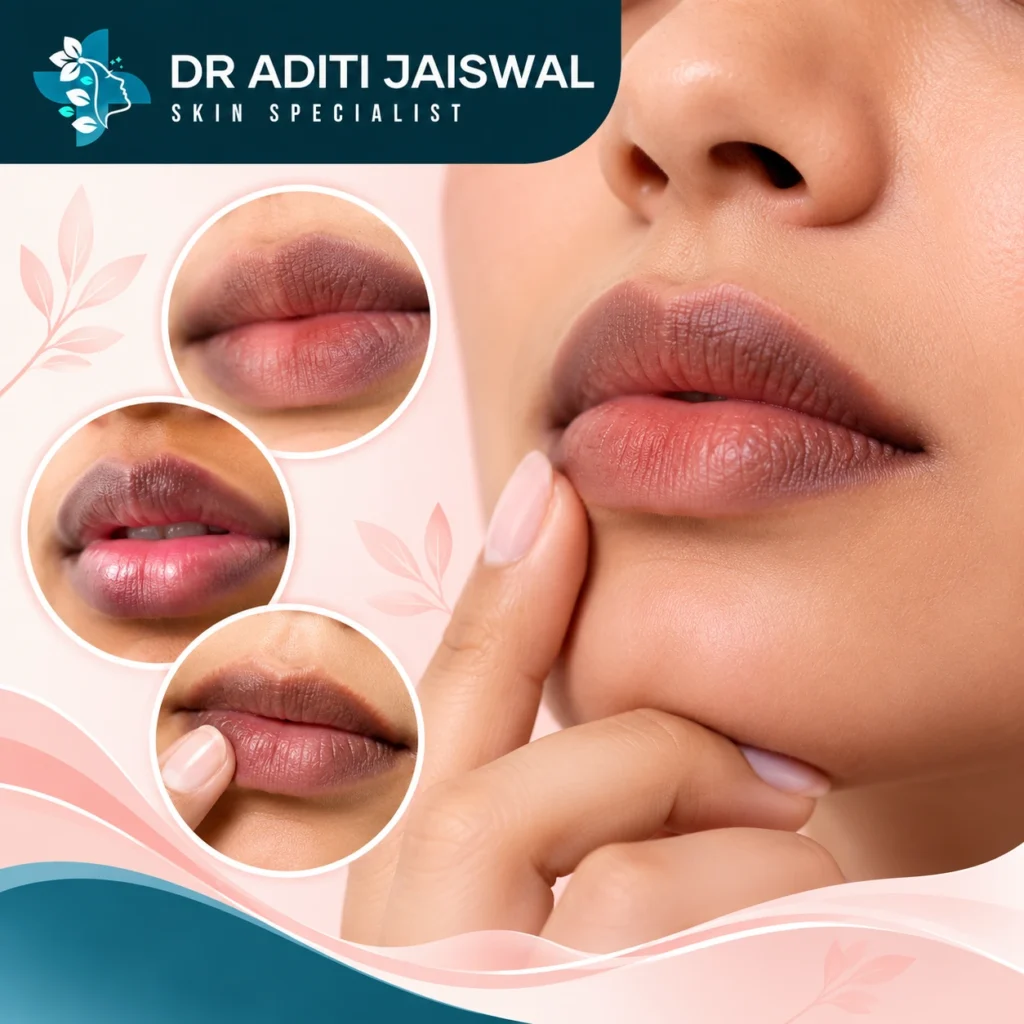
Causes of Dark Lips: What’s Behind the Discoloration
Causes of Dark Lips: Scroll through enough skincare content, and you’d think dark lips are purely a cosmetic inconvenience, something a lip mask can fix in a weekend. Dermatologists see it a little differently. Lip hyperpigmentation is genuinely common and usually harmless, but it has a wider list of causes than most people assume, and a couple of those causes are worth knowing about specifically because they’re not cosmetic at all.
Causes of Dark Lips: Everyday Culprits
Sun exposure, to a maximum extent, is the most common cause. The skin on your lips is thinner and more sensitive than the rest of your face, and UV exposure triggers the same melanin overproduction there as anywhere else — except most people apply SPF to their cheeks and forehead and never think to do the same for their lips.
Smoking runs a close second. Nicotine and the other chemicals in cigarette smoke don’t just stain teeth — they damage the small blood vessels in the lips and drive pigment changes over time, which is part of why smoker’s lip discoloration has its own specific name in dermatology literature.
Beyond those two, there’s a long list of smaller, everyday contributors: friction from waxing or shaving around the mouth, allergic reactions to lip products (a surprisingly common and under-recognized cause), and simple dehydration — lips that are chronically dry and cracked are more prone to irritation, and irritation has a habit of healing into a darker patch than what was there before. That last mechanism, post-inflammatory hyperpigmentation, explains why a cold sore, a burn from hot food, or even aggressive exfoliating can leave a dark mark behind that lingers well after the original injury is gone.
The Causes of Dark Lips that are not related to Skincare
This is the part worth actually paying attention to. Vitamin B12 deficiency is one of the more common nutritional causes of dark, patchy lip discoloration — genuinely worth ruling out with a simple blood test rather than assuming it’s purely cosmetic. Hormonal shifts, especially during pregnancy, can trigger the same kind of pigment changes seen in melasma, just showing up on the lips instead of the cheeks. And certain medications — some antipsychotics and chemotherapy drugs among them — list lip hyperpigmentation as a documented side effect.
Here’s a genuinely surprising one: a 2025 case report described a middle-aged man who developed chronic, sun-distributed hyperpigmentation traced back to long-term kratom use, a supplement increasingly used for pain or mood. Researchers noted the mechanism isn’t fully understood yet, and — less encouragingly — that most treatment attempts so far, including sun avoidance and lightening creams, haven’t worked particularly well, though early results with a specific picosecond laser looked more promising.
When It’s Worth a Dermatologist’s Attention, Not Just a Lip Balm
Uniform darkening is usually the harmless kind. What changes the calculus is a pattern shift: spotted or freckle-like dark patches rather than even darkening can, in rare cases, be linked to genetic conditions like Peutz-Jeghers syndrome or Laugier-Hunziker syndrome, or, less commonly, to something like Addison’s disease affecting hormone levels throughout the body. None of this means a dark spot should trigger panic — these are genuinely uncommon causes — but any pigmentation that’s raised, bleeding, rapidly changing, or texturally different from the surrounding skin is worth a professional look rather than a home remedy.
What Actually Helps
Sun protection is, unglamorously, the single most effective preventive step — a lip balm with SPF, applied as consistently as you’d apply sunscreen anywhere else. Beyond prevention, topical ingredients with real evidence behind them include azelaic acid and kojic acid, both available over the counter, with prescription-strength hydroquinone as a stronger option under a dermatologist’s guidance. For more stubborn or longstanding pigmentation, in-office options like chemical peels and laser therapy tend to outperform anything sold over the counter — though it’s worth knowing upfront that plenty of the “lip lightening” products marketed directly to consumers simply don’t have the evidence behind them that their packaging implies.
The one thing that reliably makes things worse: aggressive scrubbing or exfoliating in an attempt to fix discoloration fast. Since irritation itself can trigger more pigment production, an overly harsh routine often just restarts the exact cycle it was meant to solve.