Health

fungal acne on face

Fungal Acne on the Face: Why It’s Not Actually Acne

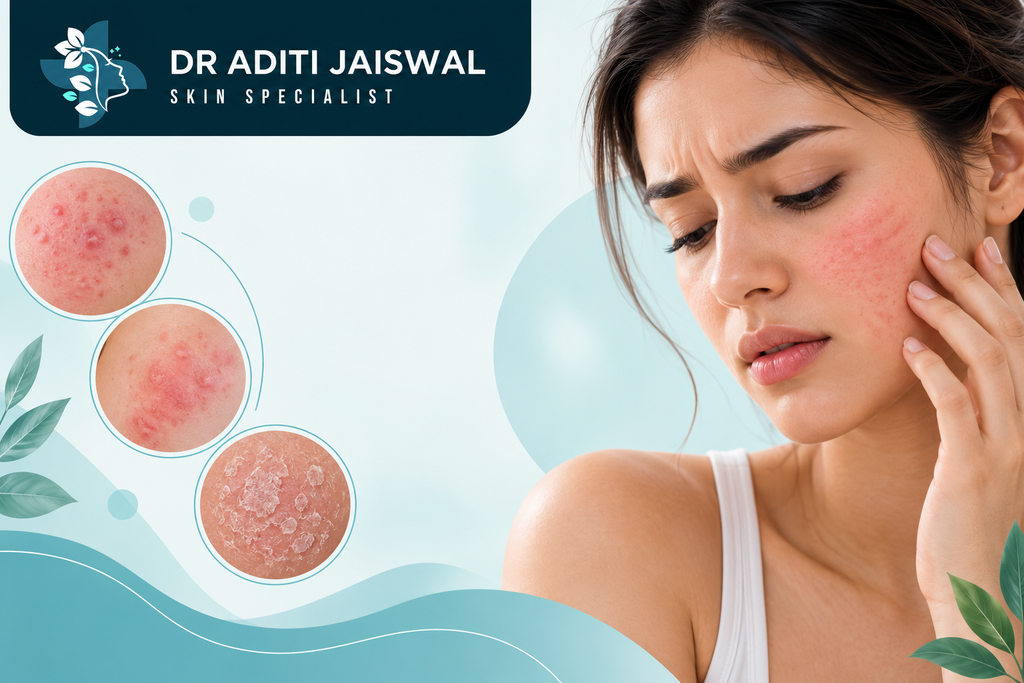
Fungal Acne on the Face: Why It’s Not Actually Acne Here’s a frustrating scenario dermatologists see often: someone with persistent, itchy facial bumps tries retinoid after retinoid, cycles through benzoyl peroxide, maybe even a course of antibiotics — and nothing works, or things get worse. The likely explanation isn’t a stubborn acne case. The diagnosis was wrong from the start. “Fungal acne on face,” medically known as Malassezia folliculitis, isn’t caused by bacteria or clogged pores at all — it’s a yeast infection of the hair follicles, and treating it like ordinary acne can actively prolong it. Quick self-check: Compare your breakouts against this pattern — If most of this sounds familiar, it’s worth raising Malassezia folliculitis specifically with a dermatologist, rather than continuing to escalate acne treatments that were never targeting the actual cause. What’s Actually Happening in the Follicle Malassezia is a yeast that lives on everyone’s skin as part of the normal microbial flora — it’s not inherently a problem. Under certain conditions, though, it multiplies and infects hair follicles, triggering inflammation that looks remarkably like acne on the surface. That resemblance is precisely the diagnostic trap: research reviewing this condition has found its clinical presentation so closely mimics regular acne that it frequently leads to misdiagnosis, delayed treatment, and cases persisting for years before being correctly identified. Why the Yeast Overgrows in the First Place A Trap Worth Knowing About Fungal acne on face: Have you ever reached for a steroid cream on stubborn facial bumps, only to have them improve briefly and then return? Documented cases describe topical corticosteroids masking Malassezia folliculitis — temporarily calming visible inflammation while allowing the underlying yeast infection to persist underneath, undiagnosed. It’s a pattern worth being cautious about if a “quick fix” cream keeps needing to be reapplied. Getting the Right Diagnosis Because it looks so similar to acne on visual inspection alone, confirming Malassezia folliculitis typically involves direct microscopy of a skin sample to visualize the yeast, since appearance alone is often unreliable. A 2023 expert consensus statement from the European Academy of Dermatology and Venereology also proposed a practical alternative: a two-to-four-week trial of topical antifungal treatment aimed at meaningful improvement, which can itself help confirm the diagnosis when biopsy or microscopy isn’t readily accessible. Treatment: Antifungals, Not Antibacterials Worth noting: because fungal acne on face and ordinary acne can occur together, and share some overlapping inflammatory pathways, standard acne ingredients like benzoyl peroxide and retinoids may still play a supporting role in select cases — which is exactly why an accurate diagnosis, rather than guesswork, should guide the treatment plan. The Bottom Line Persistent, itchy facial bumps that resist standard acne treatment deserve a second look — not more of the same regimen at a higher strength, but a genuine reconsideration of whether the underlying cause is bacterial, hormonal, or fungal in the first place. One question worth asking your dermatologist: Has this actually been confirmed as acne — or is it worth ruling out Malassezia folliculitis first?

Fungal Acne on the Face: Why It’s Not Actually Acne Read More »

Chemical Peels: The Skincare Step Most People Misunderstand

Ask five people what a chemical peel does, and you’ll likely get five different answers — “it burns off a layer of skin,” “it’s just a fancy exfoliant,” “it’s only for wrinkles.” The truth is more precise, and more interesting: a chemical peel is a controlled injury. A chemical agent is applied to deliberately damage a specific depth of skin, triggering the body’s own regenerative process to rebuild something smoother, more even, and often genuinely healthier underneath. The “controlled” part is exactly what separates a dermatologist’s peel from anything you’d get from an at-home scrub. Quick self-check: Before considering a peel, get clear on your goal — Your answers map directly onto which category of peel is actually appropriate — and mismatching this is where most disappointment (or damage) happens. It’s Not One Treatment — It’s Three, By Depth Dermatology classifies peels by how deep they penetrate, and each depth serves a genuinely different purpose. Superficial peels work only within the outer skin layer (epidermis). Common agents include glycolic, lactic, mandelic, salicylic, and pyruvic acids, often used alone or blended in a Jessner’s solution. These are the most forgiving option — minimal downtime, suited to mild acne, dullness, and light pigment irregularities — and are also the category most safely offered as gentler at-home versions, since professional-strength peels use far higher acid concentrations and lower pH than anything sold for self-application. Medium-depth peels reach into the papillary dermis, a layer deeper than superficial peels touch. Trichloroacetic acid (TCA) at 30-35%, Jessner’s combined with TCA, or layered salicylic/pyruvic formulations fall here. These address more stubborn concerns — moderate photoaging, deeper pigmentation, and precancerous sun-damaged patches called actinic keratoses. Deep peels, typically phenol-croton oil formulations, penetrate to the mid-reticular dermis — deep enough to deliver dramatic improvement for severe photoaging and pronounced wrinkles, but also deep enough to require genuine medical oversight, including cardiac monitoring and IV hydration during the procedure. This is not a category anyone should approach casually. Reflect for a Moment Have you ever tried an at-home peel expecting professional-level results? It’s a common mismatch — home peels are formulated with lower acid concentrations and higher pH specifically for safety, so while they can offer real, moderate improvement, they were never designed to replicate what a medium or deep professional peel achieves. What the Evidence Actually Supports Peels aren’t a vague “glow” treatment — recent research has tested them against specific conditions with measurable outcomes: Safety: What to Actually Watch For Peels are broadly safe when matched correctly to skin type and concern, but the known risks include prolonged redness, pigmentary changes (both lightening and darkening), and infection — risks that scale with peel depth. Notably, superficial and medium-depth peels have shown minimal complications even in skin of color, provided the agent and strength are chosen appropriately, which is precisely why a professional assessment matters more than trend-driven product choice. The Bottom Line A chemical peel isn’t a single treatment — it’s a spectrum, and matching the right depth to your specific concern determines whether you get real improvement or unnecessary irritation. Superficial peels are a reasonable at-home step for mild concerns; anything addressing pigmentation, texture, or aging at a meaningful level belongs in a dermatologist’s hands. One question worth asking before your next peel: Do you actually know which depth you’re getting — or are you choosing based on the product’s marketing rather than your skin’s actual need?

Chemical Peels: The Skincare Step Most People Misunderstand Read More »

dark skin on the neck

Dark Skin on the Neck: Why It’s a Signal, Not Just a Stain

Dark skin on the neck: someone notices a dark, velvety patch on the back of their neck and reaches straight for a scrub, an exfoliant, or a brightening cream — treating it like dirt that needs to be washed off harder. When none of that works, and the patch persists or even spreads, it’s usually because the assumption was wrong to begin with. This isn’t ordinary pigmentation. It’s a skin condition called acanthosis nigricans, and dermatologists describe it best not as a disease in itself, but as a visible signal that something else in the body needs attention. Quick self-check: Take a look at the back and sides of your neck — If several of these match, the pattern points toward acanthosis nigricans rather than everyday hyperpigmentation — and that distinction matters for how it should actually be treated. What Makes This Different from Ordinary Dark Patches Acanthosis nigricans develops when skin cells reproduce faster than normal, producing two changes at once: hyperpigmentation (increased pigment, making the skin darker) and hyperkeratosis (a thickened outer layer from excess keratin production). That combination is what gives the affected skin its distinctive velvety, slightly raised texture — genuinely different from postinflammatory hyperpigmentation, which tends to appear flat and localized to areas of prior irritation or inflammation, without the thickened texture. The Root Cause: Almost Always Insulin In the large majority of cases, the trigger is excess insulin circulating in the body — a hallmark of insulin resistance. That excess insulin activates growth-factor receptors in the skin, prompting the very cell overgrowth that thickens and darkens it. This is why acanthosis nigricans is so strongly linked to obesity and type 2 diabetes, and why people who have it are considered at meaningfully higher risk of developing type 2 diabetes going forward, even if their blood sugar looks normal at the time the skin changes are noticed. Other recognized triggers include: A nuance worth knowing: research indicates that in people with deeper skin tones, acanthosis nigricans is more common on the neck but doesn’t correlate with insulin resistance as reliably as it does in lighter skin tones. In other words, the same visible sign can carry a different diagnostic weight depending on skin type — which is exactly why self-diagnosis has limits and a clinical evaluation matters. Reflect for a Moment Have you tried lightening creams or exfoliation on this patch before, expecting it to fade like ordinary sun damage or dirt buildup — only to have it persist or spread? That specific experience is a meaningful clue. Acanthosis nigricans rarely improves with pigment-focused treatments alone, precisely because the pigment isn’t the actual problem. Getting the Right Diagnosis A doctor can usually identify acanthosis nigricans through visual examination alone, but the real diagnostic work is figuring out why it’s there. This typically involves blood glucose and insulin testing, a thyroid panel, and a review of current medications. Sudden onset, rapid spread, or involvement of unusual areas like the palms may prompt additional screening to rule out an underlying malignancy. Treatment: Fix the Driver, Then the Skin The Bottom Line Dark skin on the neck isn’t a hygiene problem, and it rarely responds to being treated like one. It’s the skin reflecting something happening internally — most often insulin resistance. Which means the most effective treatment starts with the root cause, not the cream aisle. One question worth asking yourself: Have you ever had this patch evaluated for what’s actually causing it — or only ever treated for how it looks?

Dark Skin on the Neck: Why It’s a Signal, Not Just a Stain Read More »

How to clear blackheads

Blackheads: Why They Keep Coming Back

Blackheads: Why They Keep Coming Back How to Clear Blackheads If you’ve ever squeezed a blackhead, watched it vanish for two days, and then seen it reappear in the same spot — you’re not imagining things, and you’re not alone. Blackheads are one of the most common skin concerns dermatologists see, yet also one of the most mismanaged, largely because most of what circulates online focuses on removing them rather than understanding why they form in the first place. How to clear blackheads Quick self-check: Take a look in the mirror and ask: If most of that sounds familiar, keep reading — the answer to “why won’t these go away” is usually a mix of biology and a treatment mismatch. What’s Actually Happening in Your Pores A blackhead (technically an “open comedone”) forms when a hair follicle gets clogged with excess sebum (oil) and dead skin cells. Unlike a whitehead, the pore stays open at the surface — and when that trapped mixture is exposed to air, it oxidizes and turns dark. That’s the science-backed explanation for the color: it’s oxidation, not dirt, which is why scrubbing harder doesn’t actually help. A distinction most articles skip: not every dark dot on your nose is a true blackhead. Many are sebaceous filaments — a normal, harmless part of the pore lining that regulates oil flow. True blackheads are typically more raised and irregular; sebaceous filaments are smaller, more uniform, and reappear almost immediately after extraction because they’re a structural feature, not a clog. Treating both the same way is a common reason people feel like nothing works. Why Some Skin Is More Prone Than Others How to Clear Blackheads Treatment That’s Actually Backed by Evidence Reflect for a moment: Before trying a new product, ask yourself — is this addressing the clog itself, or just the surface appearance? That question separates effective treatment from temporary cosmetic fixes. First-line, evidence-supported options: When home care isn’t enough: What to avoid: Pore strips and aggressive manual extraction are consistently flagged in current dermatology guidance as low-value or counterproductive — they can strip the skin barrier, irritate surrounding tissue, and often target sebaceous filaments rather than true blackheads, meaning the “results” are temporary at best. Setting Realistic Expectations Most evidence-based routines take 4 to 12 weeks of consistent use before visible improvement — a timeline worth writing down so you don’t abandon a working routine too early. If blackheads are widespread, painful, or accompanied by cysts or nodules, that points toward a more complex acne pattern worth discussing with a dermatologist rather than managing solo. The Bottom Line Blackheads aren’t a hygiene failure — they’re a predictable result of oil, dead skin cells, and biology interacting inside a pore. The most effective path isn’t more scrubbing or extraction; it’s consistent use of ingredients that address the clog itself. One question to sit with: Is your current routine treating the actual clog — or just the appearance for a day or two? This article is for general educational purposes and does not replace personalized medical advice. For persistent or severe acne, please consult a dermatologist.

Blackheads: Why They Keep Coming Back Read More »

PCOS and the Skin

PCOS and Your Skin: The Acne-Hormone Connection

PCOS and the skin: persistent acne along the jawline, chin, and lower face is often more than a cosmetic concern. For many women, it can be an outward sign of underlying hormonal changes within the body.  PCOS and the Skin When acne develops along with irregular menstrual cycles, increased facial or body hair, or noticeable weight fluctuations, it may be linked to Polycystic Ovary Syndrome (PCOS). This common hormonal disorder affects many women during their reproductive years and often contributes to persistent skin concerns. What Is PCOS? PCOS is a complex hormonal disorder that affects the ovaries and disrupts the body’s normal hormone balance. While it’s best known for causing irregular menstrual cycles and fertility challenges, its effects reach far beyond reproductive health. PCOS and the skin: For as many as 40 percent of women with PCOS, one of the most visible symptoms is acne. It often appears alongside other signs like excess facial or body hair, thinning scalp hair, and weight gain, all pointing back to the same hormonal root cause. Why Does PCOS Trigger Acne? The connection comes down to androgens — a group of hormones that includes testosterone. In women with PCOS, the ovaries produce higher-than-normal levels of androgen hormones such as testosterone and DHEA. These excess androgens overstimulate the skin’s oil-producing sebaceous glands, leading to more sebum production than the skin needs. This extra oil combines with dead skin cells to clog pores, creating an ideal environment for acne-causing bacteria to thrive. The result is often deeper, more inflamed breakouts than typical acne — frequently described as deep, cystic, and painful, rather than the surface-level whiteheads and blackheads many people expect. The Insulin Resistance Piece Hormones don’t act alone. Insulin resistance can further increase androgen production, creating a feedback loop that makes acne harder to control. This is one reason PCOS-related acne often overlaps with other metabolic symptoms, and why hyperandrogenism and insulin resistance are considered the two cornerstone mechanisms driving acne in PCOS, working together to increase oil production, clog pores, and fuel inflammation. Why It Feels Different from Typical Acne Unlike typical teenage acne, which often improves over time, acne associated with PCOS can continue into adulthood and may not respond well to non-prescription skincare products. It’s frequently concentrated along the jawline, chin, and neck, and tends to flare in a cyclical pattern tied to hormonal shifts throughout the month. When to Consider Testing If acne occurs along with irregular menstrual cycles, excessive facial or body hair, thinning scalp hair, or persistent difficulty managing weight, it may indicate an underlying hormonal imbalance. In such cases, a hormone evaluation can help identify the root cause instead of focusing solely on treating the acne. Relevant tests can include total and free testosterone, DHEA-S, fasting insulin, and glucose tolerance, alongside a pelvic ultrasound to check ovarian structure. Because normal reference ranges can be wide, it’s reasonable to ask to see actual lab numbers rather than a simple “normal” or “abnormal” label. Treatment: Addressing the Hormones, Not Just the Skin Since PCOS-related acne is hormonally driven, dermatologists and gynecologists generally agree that treating the underlying hormone imbalance is often the key to lasting improvement. Common approaches include: Hormonal birth control. Certain oral contraceptives can lower androgen levels and reduce breakouts by regulating the hormonal fluctuations driving excess oil production. Anti-androgen medications. Drugs such as spironolactone work by blocking the effects of excess testosterone on the skin’s oil glands, often used alongside other treatments for more resistant cases. Topical retinoids and prescription antibiotic creams or gels help reduce inflammation and prevent clogged pores, making them an effective addition to hormone-targeted treatment for acne. Isotretinoin (Accutane) for severe cases. For women whose acne doesn’t improve with other treatments, isotretinoin can significantly reduce oil production, inflammation, and clogged pores, though it works best when combined with hormonal management to prevent relapse after treatment ends. Lifestyle Factors That Support Clearer Skin Medical treatment tends to work best alongside supportive daily habits. Stress hormones like cortisol can directly worsen hormone balance and increase androgen production, making stress management a genuinely useful tool, not just a wellness cliché. A balanced, lower-glycemic diet can help improve insulin sensitivity, while gentle, non-comedogenic skincare avoids further irritation of already inflamed skin. The Bigger Picture PCOS-related acne isn’t simply a cosmetic issue — it’s a frequent and often distressing manifestation of PCOS that also serves as an important diagnostic clue. Recognizing the pattern early can lead not just to clearer skin, but to a broader understanding and management of PCOS itself, including its effects on fertility, metabolism, and long-term health. If your acne feels resistant to standard treatments and comes with other hormonal symptoms, a conversation with a dermatologist and a gynecologist working together can help identify the underlying cause and develop a treatment plan suited to your body.

PCOS and Your Skin: The Acne-Hormone Connection Read More »

Fungal Skin Infections in Hyderabad

Fungal Skin Infections in Hyderabad’s Monsoon

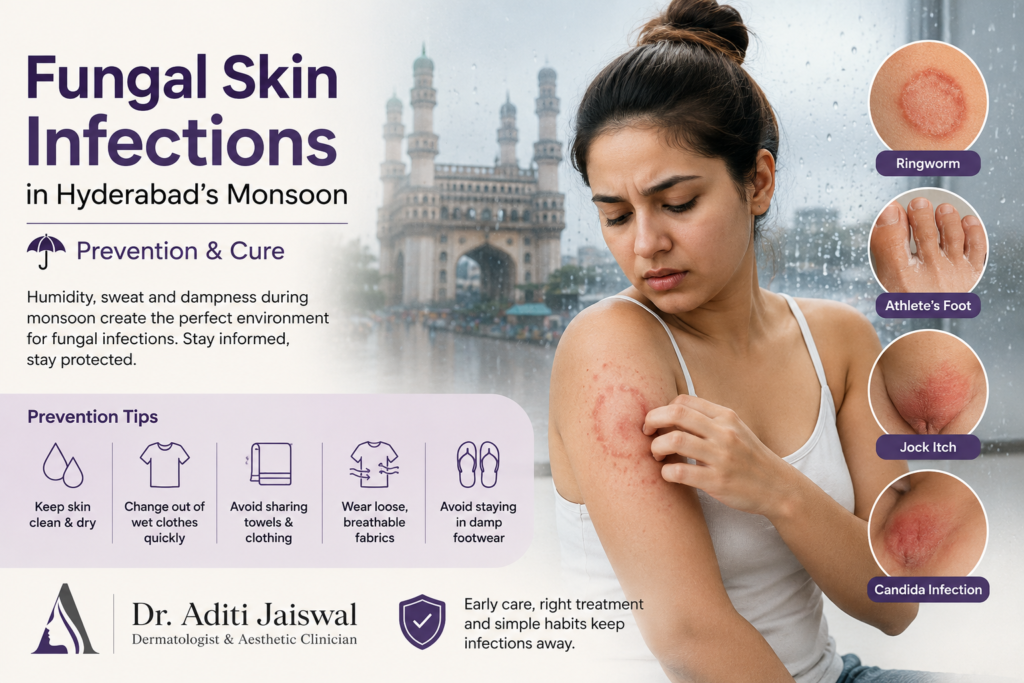
Fungal Skin Infections in Hyderabad’s Monsoon: Prevention & Cure Fungal skin infections: Hyderabad’s monsoon brings welcome relief from the summer heat, but the same humidity that cools the air also creates perfect conditions for fungal skin infections to take hold. Understanding why this happens — and what to do about it — can save you weeks of discomfort. Why Monsoon Triggers Fungal Skin Infections Fungi thrive in warm, damp environments, and monsoon season delivers exactly that. Humidity, sweat, damp clothing, wet footwear, and reduced skin dryness during monsoon make certain body areas more vulnerable to irritation, itching, and infection. In cities that see heavy, prolonged rainfall, this effect is amplified. Dermatologists across Indian metros report a sharp seasonal spike in fungal skin conditions every year during this window, with humid regions seeing it earlier and more severely than drier ones. A compromised skin barrier makes matters worse — frequent washing combined with friction from damp fabric weakens the skin barrier, making it easier for fungi to take hold. Common Types You Might Encounter Several fungal skin infections tend to surface this time of year. Although its name suggests otherwise, ringworm is not caused by worms. It is a common fungal infection that affects the skin, hair, or nails, and it often produces an itchy, scaly, circular or ring-shaped patch. It also spreads easily during wet weather — ringworm can spread more readily in the monsoon when skin stays damp or when towels, bedding, or clothing are shared with an infected person. Feet are especially vulnerable too. Athlete’s foot affects the feet, particularly between the toes, and may cause itching, peeling, scaling, burning, or painful cracks.The groin is also a frequently affected area. Jock itch causes an itchy, scaly rash in the groin and inner thighs that worsens with sweating and friction. Skin folds aren’t spared either, since candida can overgrow in moist skin folds, producing a bright or dark red, uncomfortable rash, sometimes with small satellite spots around the edges. In Hyderabad specifically, certain lifestyle factors add extra risk. In India, these infections often rise during monsoon, especially among people who walk long distances, wear socks for extended hours, or share footwear, and children, teenagers, and men tend to be more vulnerable, particularly to scalp ringworm, jock itch, and athlete’s foot. Recognizing Serious Signs Most fungal skin infections start small but shouldn’t be ignored. In more severe cases, blisters or pus-filled sores can develop, especially with scratching or a secondary bacterial infection. See a dermatologist promptly if the rash spreads, keeps returning, affects the nails or scalp, causes pain, involves multiple areas, or doesn’t improve with basic care. Prevention: Simple Habits That Actually Work The good news is that prevention doesn’t require expensive products. Dermatologists agree that prevention remains the most effective strategy, and it doesn’t require expensive skincare routines. Practical daily habits go a long way: keep skin clean and dry, change out of wet clothing quickly, dry thoroughly between the toes, avoid sharing towels, choose breathable clothing, and avoid staying in damp footwear. Treatment: What Dermatologists Recommend If an infection develops, targeted treatment usually cures it. A localized fungal skin infection may be treated with an antifungal cream, lotion, or gel, used exactly as directed and for the full course, even if itching improves early. Recovery time varies: skin infections may improve within a few weeks with appropriate treatment, while scalp and nail infections often need longer courses. One important caution: avoid reaching for random anti-itch creams from the pharmacy. Some anti-itch creams contain steroids that may briefly reduce redness but can worsen fungal infections if used without a dermatologist’s guidance. Diagnosis itself may need more than a glance, since a skin scraping, nail sample, or fungal culture is often more useful than routine blood tests for confirming a superficial fungal skin infection, and testing matters because fungal infections can resemble other skin conditions like eczema or psoriasis. The Takeaway Hyderabad’s monsoon doesn’t have to mean a season of itchy, recurring rashes. Staying dry, changing out of wet clothes promptly, choosing breathable fabrics, and treating early signs seriously can prevent most fungal skin infections — and if something doesn’t clear up within a couple of weeks, a dermatologist visit is the safer next step than self-treating indefinitely.

Fungal Skin Infections in Hyderabad’s Monsoon Read More »

Psoriasis Care Plan This Monsoon to Curb Flares

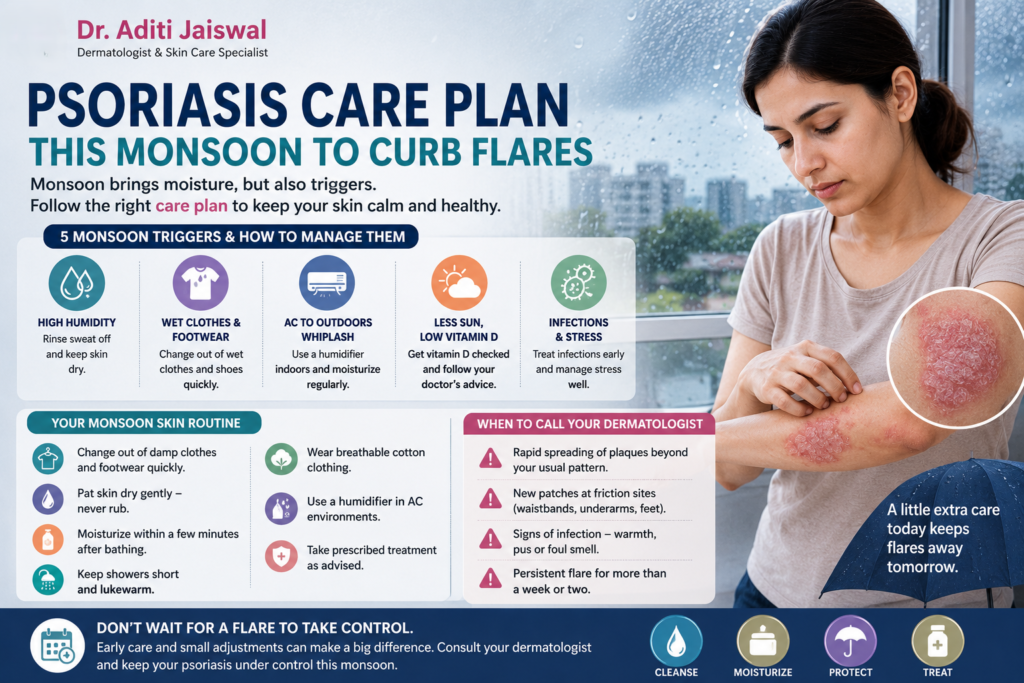
Psoriasis Care Plan: Managing Flare-Ups During Monsoons Psoriasis care plan: Psoriasis doesn’t mind one kind of weather — it minds change. And Hyderabad’s monsoon delivers more of that than almost any other season. Between June and September, skin barely adjusts to one condition before the next arrives: muggy air outside, dry air-conditioned rooms inside, soaked clothes one hour, thick humidity the next. For someone managing psoriasis, that constant back-and-forth is exactly the kind of stress that invites a flare. The following psoriasis care plan can help: Five Monsoon Triggers, and How to Work Around Each Humidity sits on the skin. Moderate humidity keeps skin supple, but sustained dampness lets sweat linger, and evaporating sweat leaves behind salts that irritate plaques. Rinse and dry sweaty areas promptly rather than letting moisture sit. Wet clothes and footwear. Damp fabric rubbing against skin for hours is a classic trigger for new plaques at friction sites — a pattern known as the Koebner response. Change out of wet clothes and shoes as soon as you’re indoors, rather than waiting for them to dry on you. AC-to-outdoors whiplash. Bouncing between muggy outdoor air and dry air conditioning repeatedly stresses the skin barrier. If you spend long stretches in AC, a small humidifier and a midday moisturizer top-up help smooth the transition. Grey skies, less vitamin D. Overcast monsoon skies mean less natural sunlight and lower vitamin D synthesis — one reason many people see plaques ease in sunny months and return once the sun disappears. It’s worth asking your dermatologist whether a vitamin D check or a phototherapy schedule adjustment makes sense this season. Monsoon infections and stress. This season brings more seasonal infections, and immune activation from any illness is a recognized flare trigger. Prompt rest and treatment of infections indirectly protects your skin too. Psoriasis care plan: Your Monsoon Skin Routine Building a few consistent habits matters more than any single product: Watch for Infection, Not Just Flaking Humid, damp skin folds are an easy place for fungus and bacteria to take hold. Increased warmth, odor, or pus around a patch is a signal to see a dermatologist, not to self-treat — a superimposed infection needs different management than a plain psoriasis flare. When to Call Your Dermatologist Don’t Wait for a Full Flare to Check In Monsoon-specific adjustments — lighter moisturizers, short-term antifungal support, or a small treatment tweak — are far easier to make before a flare peak than after. If your psoriasis has been unpredictable in past monsoons, this is the right time to book a check-in with your dermatologist, not after symptoms escalate. Bring a quick log of what you’ve noticed this season — new patches, itch levels, anything that flares after rain or AC exposure — so your dermatologist can adjust your plan with real information instead of guesswork.

Psoriasis Care Plan This Monsoon to Curb Flares Read More »

Dark Circles, Decoded: What Actually Helps

Vitiligo: Everyone Recognizes, But A Few Understand

Vitiligo isn’t rare, isn’t contagious, and — as of the last few years — isn’t untreatable either. Vitiligo affects roughly 0.5–2% of people worldwide, making it one of the most common pigmentation disorders, yet it remains one of the most misunderstood. It develops when the immune system mistakenly targets melanocytes, the cells that produce melanin, leaving behind smooth, well-defined patches of depigmented skin. It isn’t an infection, a fungus, or a sign of poor hygiene — it’s an autoimmune process, closely related in mechanism to conditions like alopecia areata and autoimmune thyroid disease, which is why the two often appear together in the same person or family. Myths vs. Facts Myth: “Vitiligo is contagious — you can catch it by touch.” Fact: There’s no infectious cause. Vitiligo is autoimmune — the immune system attacks the body’s own pigment-producing cells. There’s no mechanism by which touch, shared utensils, or proximity could transmit it. Myth: “It’s just cosmetic — it doesn’t need real treatment.” Fact: Beyond appearance, vitiligo is linked to a higher likelihood of other autoimmune conditions, particularly thyroid disease, and carries a well-documented psychological toll. That’s exactly why dermatology treats it as a genuine medical condition, not a purely cosmetic one. Myth: “Eating certain food combinations (like fish with milk) causes it.” Fact: There’s no credible evidence linking specific food pairings to onset. The real trigger is autoimmune, often with a genetic predisposition — diet plays no established role. Myth: “There’s nothing modern medicine can do — patches are permanent.” Fact: FDA-approved topical JAK inhibitors, often combined with phototherapy, have produced real, sustained repigmentation in clinical trials — a genuine shift from decades of limited options. Myth: “Only darker skin tones develop vitiligo.” Fact: It occurs across all ethnicities and skin tones at similar rates. It’s simply more visually striking on darker skin, which is likely why the association persists. Myth: “Sun exposure can cure the white patches.” Fact: Unprotected sun exposure doesn’t restore pigment and raises sunburn risk in depigmented areas, since they lack melanin’s natural UV protection. Dermatologists recommend sunscreen on affected patches, not tanning. What’s Actually New in Treatment For decades, options were limited to corticosteroids, calcineurin inhibitors, and phototherapy — each modestly effective at best. That changed with a deeper understanding of the biology: vitiligo progresses largely through interferon-gamma signaling, which recruits immune cells that destroy melanocytes via a chemical messenger called CXCL10. Blocking that pathway directly, rather than just suppressing inflammation broadly, is now the basis of the newest therapies. Topical JAK inhibitors: Ruxolitinib cream, a JAK1/2 inhibitor that interrupts interferon-gamma signaling, became the first FDA-approved repigmenting treatment for non-segmental vitiligo in patients 12 and older, following two phase 3 trials published in the New England Journal of Medicine. Longer-term follow-up out to three years, along with real-world studies published through 2026, shows repigmentation — especially on the face — continuing to improve with sustained use, often better maintained than with older topical options. Combination with phototherapy: Pairing ruxolitinib cream with narrow-band UVB light appears to accelerate and deepen repigmentation compared with either approach alone, according to recent clinical research, making combination regimens increasingly common for stubborn patches. Phototherapy alone: Narrow-band UVB remains a well-established first-line option, particularly for widespread disease, typically requiring sessions over several months under medical supervision. Surgical repigmentation: For small, stable patches that haven’t responded to medical therapy — often seen in segmental vitiligo — techniques such as melanocyte-keratinocyte transplantation can transfer pigment-producing cells from unaffected skin to depigmented areas. Camouflage and psychological support: Medical-grade cosmetic camouflage remains a legitimate, evidence-based option for people seeking coverage without systemic treatment. Because vitiligo carries a well-documented emotional burden, dermatology bodies increasingly recommend connecting patients with counseling or support communities alongside physical treatment. The bigger shift: treatment goals have moved from “manage the disease” to genuine repigmentation, targeted at the immune mechanism itself rather than just calming inflammation — a meaningful change from where dermatology stood even five years ago.

Vitiligo: Everyone Recognizes, But A Few Understand Read More »

Dark Circles, Decoded: What Actually Helps

Dark Circles, Decoded: What Actually Helps

Try this quick experiment: next time you look tired-looking in the mirror, gently stretch the skin under your eye. Does the darkness lighten up, or does it stay put? That one observation — more than any amount of concealer — is often the fastest clue to what’s actually causing your dark circles, and therefore what will actually fix them. Not One Problem — Three Dermatologists generally describe under-eye darkness as falling into three overlapping categories, and most people have some mix of all three: 1. Pigmented circles — genuine brown discoloration of the skin itself, driven by excess melanin. This type runs strongly in families; research has found a clear link between dark circles and family history, and it’s also worsened by sun exposure and, in some people, by chronic rubbing or scratching around the eyes from allergies or eczema, which triggers post-inflammatory pigmentation. 2. Vascular (bluish) circles — caused by visible blood vessels showing through skin. The skin under your eyes is some of the thinnest on your body, with very little supporting fat, so underlying blood vessels, muscle, and even bone contours show through more easily here than almost anywhere else on the face. Poor sleep and dehydration don’t create new pigment, but they do reduce circulation and cause fluid retention, making these vessels more prominent — which is exactly why a rough night shows up under your eyes first. 3. Structural (shadow) circles — not discoloration at all, but shadow. As we age, we lose collagen and fat volume around the eyes, creating a hollow that catches light and casts a shadow, mimicking a dark circle even when the skin tone hasn’t changed. This is the type that often does not fade no matter how much sleep or serum you throw at it, because it’s an architecture problem, not a pigment problem. Your two-second self-check: Gently pull the skin taut. If it lightens noticeably, pigment or shadow is a bigger factor and topical treatment is likely to help. If it barely changes and the area also looks puffy or hollow, structural volume loss is probably driving it, and you may need to think beyond skincare. What Genuinely Helps For everyone, regardless of type: For pigmented circles specifically: Topical ingredients with real evidence behind them include vitamin C (antioxidant support against UV-driven pigment), retinoids (which encourage skin turnover), and hyaluronic acid, which won’t remove pigment but plumps and hydrates the area, softening how the discoloration reads visually. Most people need 4 to 6 weeks of consistent use before seeing meaningful change — this isn’t an overnight category. For vascular circles: Caffeine-containing eye creams can temporarily constrict blood vessels and reduce that bluish look. Beyond skincare, addressing hydration and sleep has an outsized effect here compared with pigmented circles, since the mechanism is circulatory rather than structural. For structural, shadow-driven circles: This is where skincare hits its ceiling, and procedural options come in. Dermatologists commonly use hyaluronic acid filler injected into the tear trough to restore lost volume and smooth the transition from cheek to lower lid, reducing the shadow itself. Laser resurfacing or gentle chemical peels can improve skin texture and tighten the area, which can also soften the appearance of visible vessels. Platelet-rich plasma injections are another option some practices offer to stimulate collagen in this area. When to See a Doctor Instead of a Mirror Dark circles are usually a cosmetic concern rather than a medical one — but a few patterns are worth flagging to a doctor: darkening that appears on only one side, sudden onset, or circles accompanied by swelling, itching, or a rash, which can point to an underlying allergic or thyroid-related condition rather than ordinary aging or fatigue. The Takeaway There’s no single “cure” for dark circles because there’s no single cause. Figuring out whether yours are pigment, vessels, volume loss, or some blend of the three is the real first step — everything else, from sunscreen to filler, follows from that answer.

Dark Circles, Decoded: What Actually Helps Read More »

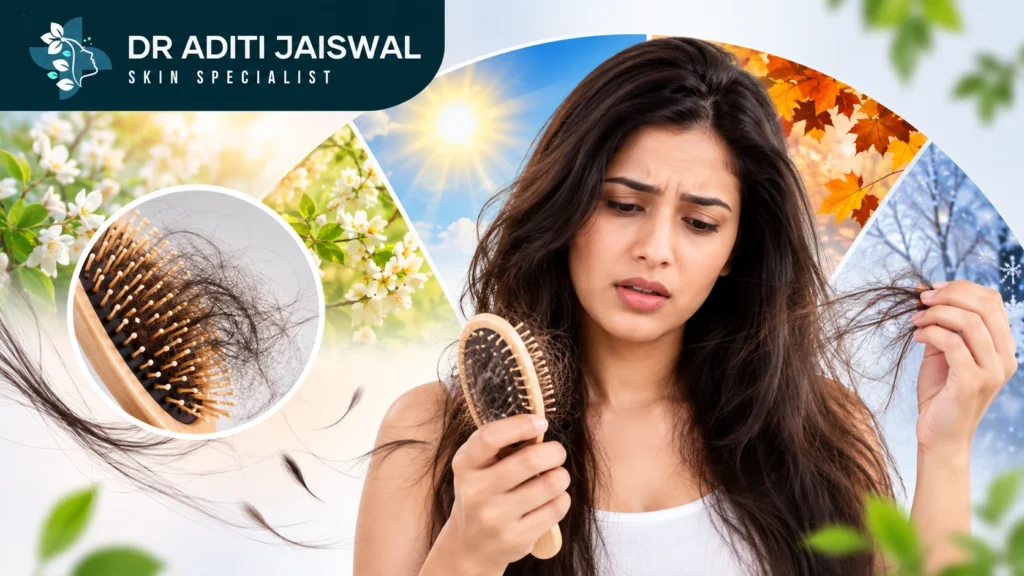
What Causes Hair Fall in Monsoon

What Causes Hair Fall in Monsoon

Many dermatologists, hairdressers, and salons repeatedly receive the same complaint during June, July, and August: hair fall. You are not alone in experiencing hair loss during the monsoon season. It’s not your imagination; it’s real and well-documented. If you don’t know what’s really happening to your scalp and hair during the rainy season, it’s difficult to manage hair loss. Don’t worry; the following guide can help you manage your condition. The Reasons Why Monsoon is Harsh on Your Hair 1. Humidity makes your Hair shaft swell Hair is hygroscopic — it absorbs moisture from the air. During monsoon, excess humidity makes the hair shaft swell and the cuticle (the outer protective layer) lift. Swollen, raised cuticles make hair more porous, more tangled, and far more prone to breakage when you brush or tie it. 2. Fungal overgrowth due to trapped moisture and scalp sweat Humid air doesn’t just affect your hair strands — it affects your scalp environment. Sweat mixes with rainwater and doesn’t evaporate easily, creating a warm, damp breeding ground for fungus and bacteria. This often shows up as dandruff, itching, or folliculitis (inflamed hair follicles), all of which accelerate shedding. 3. Rainwater damages your hair Rainwater picks up pollutants, acidic compounds, and grime on its way down — especially in cities. Repeated, unprotected exposure strips natural oils from the scalp and roughens the hair cuticle, leaving strands dry, frizzy, and weak. 4. Dirty, Wet Hair Left Tied Up A common monsoon habit — tying up damp hair and forgetting about it — is one of the worst things you can do. Wet hair is structurally weaker than dry hair, and keeping it bound increases tension at the roots while trapping moisture against the scalp, compounding the fungal issue above. 5. Seasonal Shedding Is Partly Natural Some hair fall in the monsoon is simply biology. Hair growth happens in cycles, and many people experience a higher percentage of follicles entering the “resting/shedding” phase (telogen) around seasonal transitions, particularly from summer into monsoon. This is temporary and usually self-corrects within a few months. How to Stop Hair Fall: Monsoon Hair Routine Before You Step Out Don’t skip oiling—a light coconut or argan oil application creates a barrier that reduces rainwater absorption into the scalp and shaft Tie hair loosely in a braid rather than a tight bun if you’ll be out in the rain—loose styles reduce breakage from friction and tension Carry a scarf or umbrella specifically to protect hair, not just yourself If You Get Caught in the Rain Rinse with clean water as soon as possible—don’t let rainwater dry on your scalp; the pollutants left behind irritate the skin and clog follicles Never tie wet hair—let it air dry partially before tying, and avoid tight elastics on damp strands Your Washing Routine Wash every 2–3 days, not daily — over washing strips natural oils your scalp needs even more during monsoon, but under-washing lets sweat and fungus build up Use a mild, sulfate-free shampoo—harsh sulfates worsen dryness and irritation on an already-stressed scalp Follow with a lightweight conditioner, focusing on lengths, not roots—heavy conditioner near the scalp can trap moisture and worsen fungal issues Cold or lukewarm water only — hot water further dries out the scalp and roughens the cuticle Drying & Styling Avoid vigorous towel-drying — wet hair is fragile; squeeze gently or pat dry instead of rubbing Use a wide-tooth comb on wet hair, starting from the ends and working up — this minimizes breakage compared to brushing from the roots down Let hair air-dry as much as possible; if you must use a dryer, use the cool setting Nutrition & Internal Care Protein matters — hair is largely made of keratin, a protein, so adequate dietary protein (dal, eggs, paneer, sprouts) supports stronger regrowth Don’t neglect iron and B12 — deficiencies in either are common contributors to hair shedding, and monsoon stress can make existing deficiencies more noticeable Stay hydrated — humidity tricks people into drinking less water, but scalp health depends on it When to See a Dermatologist If you notice visible bald patches, scalp redness or pain, excessive flaking that doesn’t respond to a mild anti-dandruff shampoo, or shedding that continues well past monsoon into the following months, it’s worth getting a professional opinion rather than self-treating indefinitely. Some causes — thyroid imbalance, PCOS, severe nutritional deficiency — mimic seasonal hair fall but need different treatment entirely. A Quick Self-Check Try to answer these questions honestly Am I leaving wet hair tied up after getting caught in the rain? Have I skipped oiling my scalp for weeks? Is my shampoo too harsh, or am I washing too often (or too rarely)? Am I eating enough protein and iron-rich food? Has my shedding been going on for more than 3 months without improvement? If you answered yes to the first four, you’ve likely found your culprits — and the fixes above are direct countermeasures. If it’s the fifth, that’s your cue to consult a dermatologist rather than wait it out. The Bottom Line Monsoon hair fall can be due to several factors, including repeated exposure of the head to rainwater, water quality, humidity levels, scalp hygiene, and the natural seasonal shedding process. Furthermore, hair fall during the monsoon is a rare sign of a serious condition. You can prevent hair fall during monsoon by adopting a few healthy habits – properly washing your hair, drying your hair properly, wearing protective gear on your scalp before stepping out, and eating well. Your hair doesn’t need a miracle product this monsoon. It needs less rainwater sitting on your scalp and a little more patience. This article is for general awareness. If hair fall is severe, sudden, or accompanied by scalp pain or visible patches, please consult a dermatologist.

What Causes Hair Fall in Monsoon Read More »

Scroll to Top