
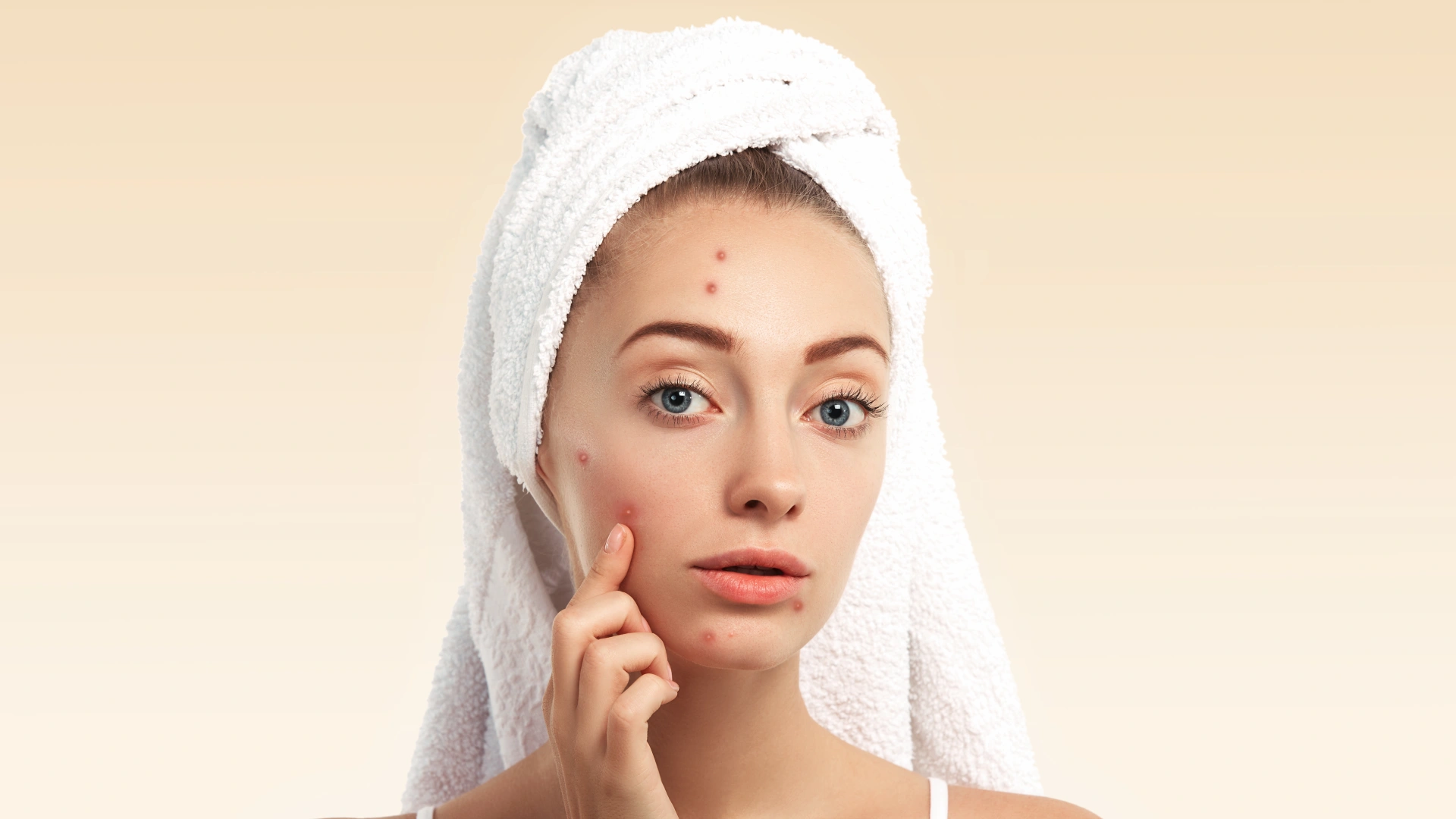
Acne isn’t one thing — it’s a handful of different processes happening under your skin at once. This guide walks through what actually causes it, how to tell different breakouts apart, and which treatments work best for each kind.
What’s Actually Causing the Breakout
Acne forms in layers — quite literally. Here is what happens at each stage, from the follicle outward.
1. Oil production ramps up
Hormones — especially androgens — signal sebaceous glands to produce more sebum (oil). This is why breakouts often track with puberty, menstrual cycles, or hormonal shifts. More oil means more raw material for everything that follows.
2. Dead skin cells don’t shed properly
Normally, dead cells lining the follicle slough off. In acne-prone skin, they stick together and clump, mixing with the extra oil to form a plug inside the pore — the earliest stage of every blemish.
3. The pore gets blocked
That oil-and-cell plug seals off the follicle. If it stays near the surface and oxidizes, you get a blackhead. If it’s sealed under the skin, you get a whitehead.
4. Bacteria multiply
Cutibacterium acnes, a bacterium that normally lives harmlessly on skin, thrives in the oxygen-poor, oil-rich environment of a blocked follicle. It multiplies fast once a pore is sealed.
5. Inflammation sets in
Your immune system reacts to the bacterial overgrowth, sending white blood cells to the area. This is what turns a quiet clogged pore into a red, swollen, sometimes painful bump — the visible part most people call “a pimple.”
Other contributors that tip the scale: genetics (family history is one of the strongest predictors), certain medications, friction or pressure on skin, some cosmetic products, and — to a smaller degree than commonly believed — diet and stress, which can worsen existing acne without single-handedly causing it.
Six Faces of Acne
Treatment depends entirely on which type you’re dealing with.
Blackheads
A pore clogged with oil and dead skin that stays open at the surface. The dark color isn’t dirt — it’s the trapped material oxidizing on contact with air.
- Feels like: Flat or slightly raised, no pain
- Common spots: Nose, chin, forehead
- Best matched with: Salicylic acid, retinoids
Whiteheads
Same clogged-pore process as a blackhead, but sealed beneath the skin’s surface, so the trapped material can’t oxidize — it stays pale and stays put.
- Feels like: Small firm bump, no redness
- Common spots: Cheeks, jawline
- Best matched with: Retinoids, gentle exfoliants
Papules
A clogged follicle where the surrounding skin has become inflamed — small, raised, red or pink, and tender to the touch, but without visible pus.
- Feels like: Tender, slightly raised
- Common spots: Anywhere on the face
- Best matched with: Benzoyl peroxide, topical retinoids
Pustules
A papule that’s progressed: white blood cells have built up enough to form a visible head of pus at the center. This is the classic “pimple.”
- Feels like: Sore, with a white/yellow tip
- Common spots: T-zone, jawline
- Best matched with: Benzoyl peroxide, topical/oral antibiotics
Nodules
Inflammation reaches deep into the skin, forming a large, hard, painful lump beneath the surface. Nodules don’t come to a head and can take weeks to resolve on their own.
- Feels like: Deep, firm, painful
- Common spots: Jawline, back, chest
- Best matched with: Oral medication, dermatologist care
Cysts
The most severe form — large, soft, pus-filled, and deeply rooted. Cysts carry the highest risk of scarring and rarely respond to over-the-counter products alone.
- Feels like: Soft, swollen, very painful
- Common spots: Jawline, back, chest
- Best matched with: Prescription treatment, dermatologist required
Common Acne Myths
A lot of acne advice circulates with confidence and no evidence. Here’s where some popular claims actually stand.
MOSTLY FALSE
“Chocolate and greasy food cause acne.”
Diet isn’t a primary cause, though high-glycemic and high-dairy diets may worsen existing acne for some people.
FALSE
“Acne means you’re not washing enough.”
Acne is driven by oil, hormones, and clogged pores — not dirt. Over-washing can actually irritate skin and worsen breakouts.
TRUE
“Popping pimples can cause scarring.”
Squeezing pushes bacteria and inflammation deeper into the skin, raising the risk of scarring and prolonging healing.
MOSTLY FALSE
“Sun exposure clears up acne.”
It may temporarily mask redness, but UV exposure damages skin and can worsen post-acne marks over time.
TRUE
“Acne can be genetic.”
Family history is one of the strongest predictors of whether — and how severely — someone develops acne.
MOSTLY FALSE
“Only teenagers get acne.”
Adult acne is common, especially in women, and is often driven by hormonal fluctuations rather than puberty.