
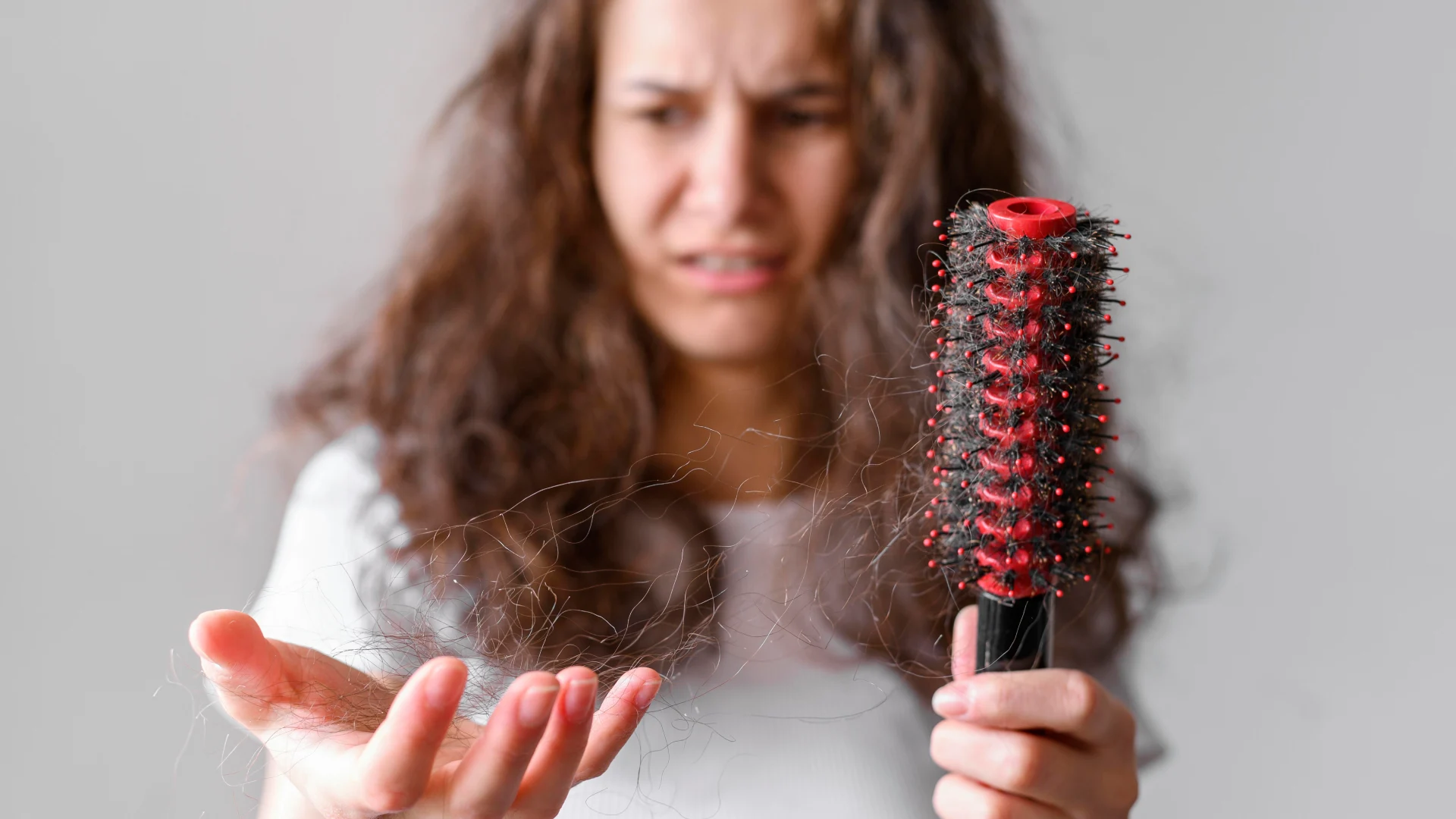
Many dermatologists, hairdressers, and salons repeatedly receive the same complaint during June, July, and August: hair fall. You are not alone in experiencing hair loss during the monsoon season. It’s not your imagination; it’s real and well-documented. If you don’t know what’s really happening to your scalp and hair during the rainy season, it’s difficult to manage hair loss. Don’t worry; the following guide can help you manage your condition.
The Reasons Why Monsoon is Harsh on Your Hair
1. Humidity makes your Hair shaft swell
Hair is hygroscopic — it absorbs moisture from the air. During monsoon, excess humidity makes the hair shaft swell and the cuticle (the outer protective layer) lift. Swollen, raised cuticles make hair more porous, more tangled, and far more prone to breakage when you brush or tie it.
2. Fungal overgrowth due to trapped moisture and scalp sweat
Humid air doesn’t just affect your hair strands — it affects your scalp environment. Sweat mixes with rainwater and doesn’t evaporate easily, creating a warm, damp breeding ground for fungus and bacteria. This often shows up as dandruff, itching, or folliculitis (inflamed hair follicles), all of which accelerate shedding.
3. Rainwater damages your hair
Rainwater picks up pollutants, acidic compounds, and grime on its way down — especially in cities. Repeated, unprotected exposure strips natural oils from the scalp and roughens the hair cuticle, leaving strands dry, frizzy, and weak.
4. Dirty, Wet Hair Left Tied Up
A common monsoon habit — tying up damp hair and forgetting about it — is one of the worst things you can do. Wet hair is structurally weaker than dry hair, and keeping it bound increases tension at the roots while trapping moisture against the scalp, compounding the fungal issue above.
5. Seasonal Shedding Is Partly Natural
Some hair fall in the monsoon is simply biology. Hair growth happens in cycles, and many people experience a higher percentage of follicles entering the “resting/shedding” phase (telogen) around seasonal transitions, particularly from summer into monsoon. This is temporary and usually self-corrects within a few months.
How to Stop Hair Fall: Monsoon Hair Routine
Before You Step Out
- Don’t skip oiling—a light coconut or argan oil application creates a barrier that reduces rainwater absorption into the scalp and shaft
- Tie hair loosely in a braid rather than a tight bun if you’ll be out in the rain—loose styles reduce breakage from friction and tension
- Carry a scarf or umbrella specifically to protect hair, not just yourself
If You Get Caught in the Rain
- Rinse with clean water as soon as possible—don’t let rainwater dry on your scalp; the pollutants left behind irritate the skin and clog follicles
- Never tie wet hair—let it air dry partially before tying, and avoid tight elastics on damp strands
Your Washing Routine
- Wash every 2–3 days, not daily — over washing strips natural oils your scalp needs even more during monsoon, but under-washing lets sweat and fungus build up
- Use a mild, sulfate-free shampoo—harsh sulfates worsen dryness and irritation on an already-stressed scalp
- Follow with a lightweight conditioner, focusing on lengths, not roots—heavy conditioner near the scalp can trap moisture and worsen fungal issues
- Cold or lukewarm water only — hot water further dries out the scalp and roughens the cuticle
Drying & Styling
- Avoid vigorous towel-drying — wet hair is fragile; squeeze gently or pat dry instead of rubbing
- Use a wide-tooth comb on wet hair, starting from the ends and working up — this minimizes breakage compared to brushing from the roots down
- Let hair air-dry as much as possible; if you must use a dryer, use the cool setting
Nutrition & Internal Care
- Protein matters — hair is largely made of keratin, a protein, so adequate dietary protein (dal, eggs, paneer, sprouts) supports stronger regrowth
- Don’t neglect iron and B12 — deficiencies in either are common contributors to hair shedding, and monsoon stress can make existing deficiencies more noticeable
- Stay hydrated — humidity tricks people into drinking less water, but scalp health depends on it
When to See a Dermatologist
If you notice visible bald patches, scalp redness or pain, excessive flaking that doesn’t respond to a mild anti-dandruff shampoo, or shedding that continues well past monsoon into the following months, it’s worth getting a professional opinion rather than self-treating indefinitely. Some causes — thyroid imbalance, PCOS, severe nutritional deficiency — mimic seasonal hair fall but need different treatment entirely.
A Quick Self-Check
Try to answer these questions honestly
- Am I leaving wet hair tied up after getting caught in the rain?
- Have I skipped oiling my scalp for weeks?
- Is my shampoo too harsh, or am I washing too often (or too rarely)?
- Am I eating enough protein and iron-rich food?
- Has my shedding been going on for more than 3 months without improvement?
If you answered yes to the first four, you’ve likely found your culprits — and the fixes above are direct countermeasures. If it’s the fifth, that’s your cue to consult a dermatologist rather than wait it out.
The Bottom Line
Monsoon hair fall can be due to several factors, including repeated exposure of the head to rainwater, water quality, humidity levels, scalp hygiene, and the natural seasonal shedding process. Furthermore, hair fall during the monsoon is a rare sign of a serious condition. You can prevent hair fall during monsoon by adopting a few healthy habits – properly washing your hair, drying your hair properly, wearing protective gear on your scalp before stepping out, and eating well.
Your hair doesn’t need a miracle product this monsoon. It needs less rainwater sitting on your scalp and a little more patience.
This article is for general awareness. If hair fall is severe, sudden, or accompanied by scalp pain or visible patches, please consult a dermatologist.